- HOME
- Development
Development
Key Development Themes for a Sustainable Society
Toray Engineering actively collaborates with universities, research institutions, industry partners, venture firms, and startups with a flexible and open mindset to create new businesses that go beyond the boundaries of our existing operations. Through these efforts, we develop ideas, technologies, and products that contribute to a sustainable society and help build a better future. On this page, we introduce our key development themes.
Carbon Neutral
Next-generation Battery Manufacturing Technologies
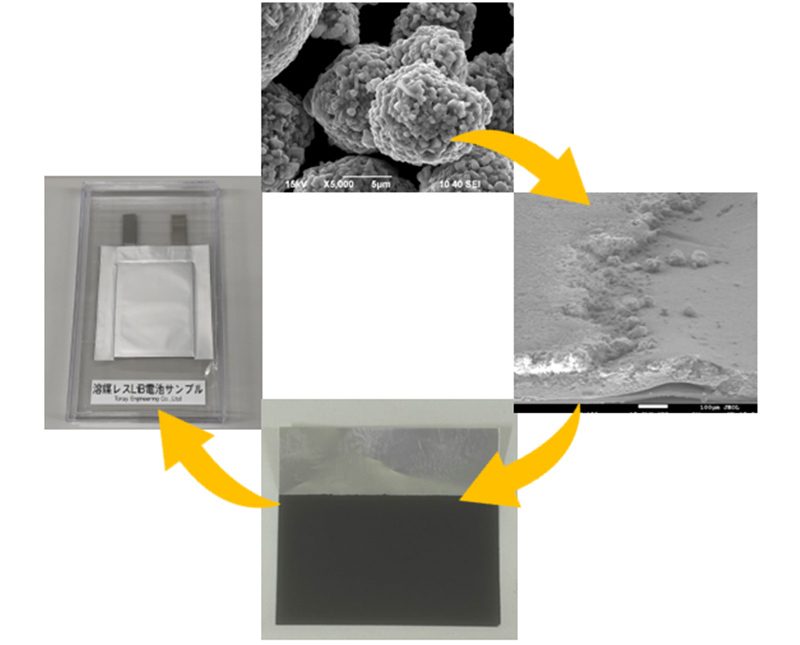
We are working to establish new manufacturing process technologies for next-generation batteries, including all-solid-state batteries. Our solutions address key industry demands, such as reducing production costs while improving battery performance and reliability, as well as broader societal needs, including the reduction of environmental impact.
To achieve these goals, we tackle a wide range of technical challenges, including the analysis of battery material properties, process optimization, and the advancement of manufacturing process control. Through these efforts, we aim to establish a robust technological foundation for the efficient production of safer, high-performance batteries, thereby contributing to the realization of a next-generation energy society.
Composite-material Laminator AFP/ATL Equipment
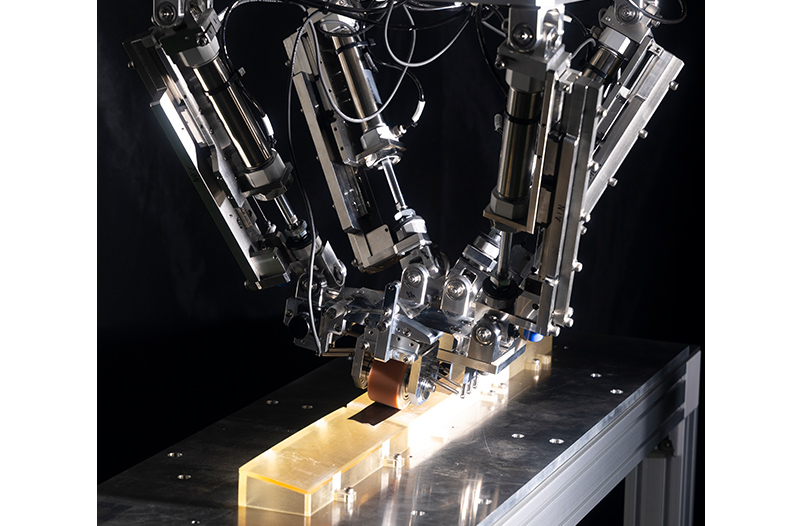
We are developing AFP/ATL* equipment—automated molding systems that place and bond UD tape (unidirectional tape reinforced with continuous fibers) made from resin-impregnated carbon fiber. We have developed high-speed machines for two-dimensional tape placement, as well as systems that use articulated robots to place tape on three-dimensional, curved surfaces. In addition, we have developed our proprietary, patented AFP/ATL* machine, which employs pneumatically controlled parallel-link mechanisms to flexibly accommodate variations in the shape of the workpiece. By applying these technologies to the automotive, aircraft, and aerospace fields, we contribute to energy savings through the realization of lightweight, high-rigidity structures.
- AFP/ATL (Automated Fiber Placement / Automated Tape Layup)
Composite-material 3D Printer
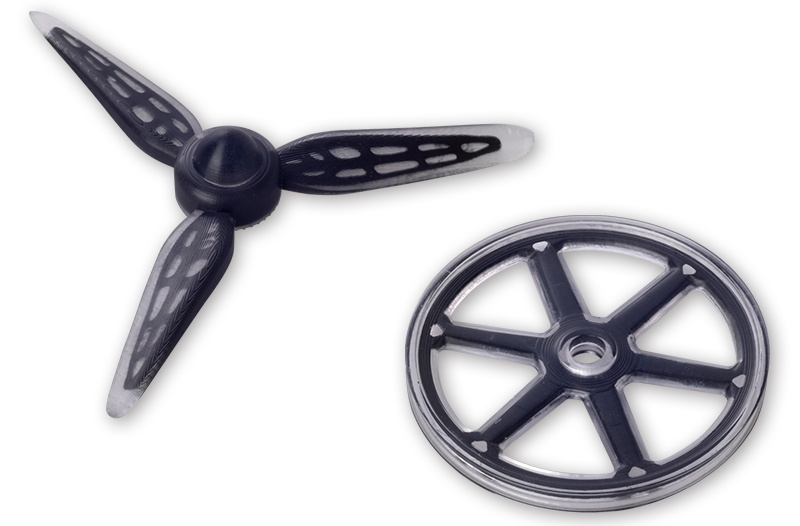
To address the fundamental issue of anisotropy in strength and rigidity inherent in conventional 3D printers, we have developed a proprietary core-shell forming technology. Using a stereolithography 3D printer, a mold in the desired shape (shell) is first created, after which a thermosetting epoxy resin (core) containing milled carbon fibers is sequentially filled into the interior and cured by heating. This process enables the fabrication of isotropic composite materials with high strength and rigidity, rather than conventional layered structures. As a result, the technology achieves both component weight reduction and improved reliability, contributing to the realization of an energy-saving society.
An explanatory video is available below.
【Molding Process】The Core
Shell Method Carbon Fiber Composite Material 3D Molding Machine
Life Innovation
Manufacturing of Surgical Assist Robot *Saroa
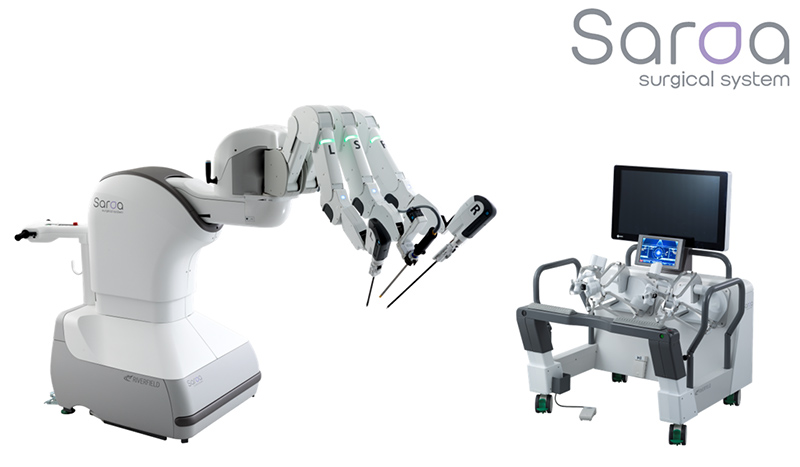
The Surgical assist robot is advanced medical devices that support minimally invasive surgery by precisely replicating the surgeon’s movements, thereby reducing the physical burden on patients and improving safety and operability in clinical settings. Through the manufacturing of RIVERFIELD’s surgical assist robot, the Saroa Surgical System (Japan Medical Device Nomenclature: Surgical Assistance Robotic Surgical Unit; Class III <Specially Controlled Medical Devices>; Approval No. 30500BZX00108000, etc.), we contribute to the provision and wider adoption of advanced medical technologies.
Drug Discovery Solutions for Ion Channels
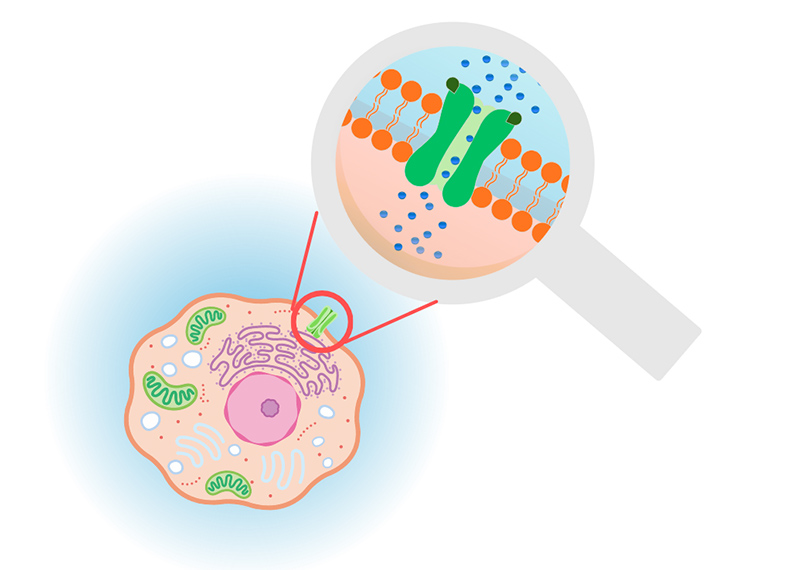
Ion channels are proteins located in cell membranes that function as pathways for ions such as sodium and calcium to pass through cells. They play an essential role in sustaining life, and abnormalities in ion channel function are known to cause a variety of diseases. By developing a support system for drug discovery targeting ion channels, we aim to improve the efficiency of pharmaceutical research and development, while contributing to advances in medical technology and human health.
Nucleic Acid Medicines Synthesizer
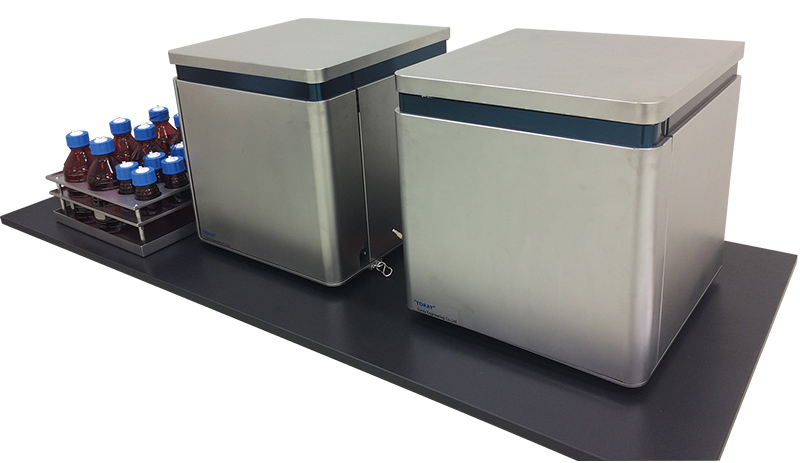
Nucleic acid medicines are a new class of drugs that utilize nucleic acids such as DNA and RNA to directly regulate the activity of disease-related genes. They are expected to be effective in treating diseases that are difficult to address with conventional medicines and are attracting attention as highly precise therapies with fewer side effects. We have developed the Molecutideser®, a high-accuracy, high-efficiency nucleic acid synthesizer, to enhance the quality and manufacturing efficiency of nucleic acid medicines.
Digital Innovation
Ultra-thin Chip Transfer Equipment
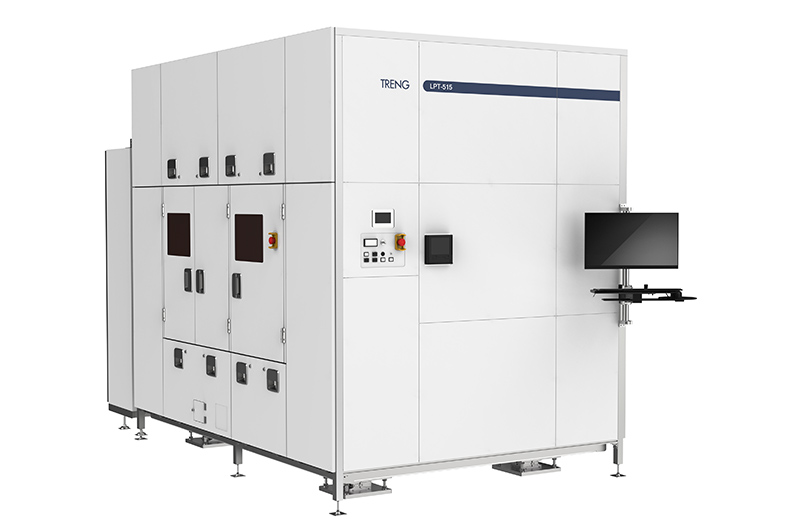
We are developing laser transfer technology for next-generation semiconductors, such as photonics-electronics integration devices. This technology uses ultra-thin laser diodes to enable high-accuracy mounting of optical elements less than 1 µm thick and ultra-thin Si chips less than 20 µm thick. By continuously advancing these innovative packaging technologies, we deliver high-throughput performance and support the mass production of next-generation semiconductors.
Low Temperature CVD System
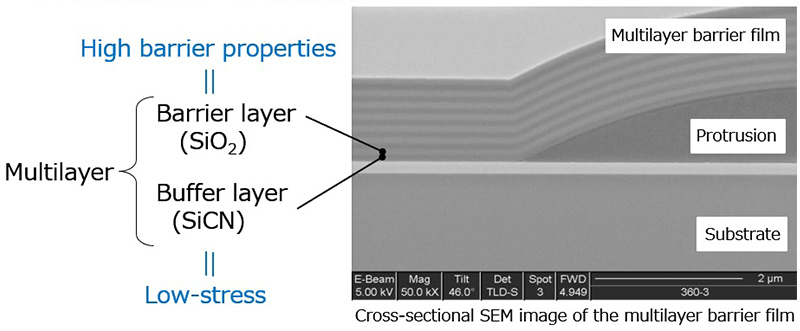
We are developing a low temperature CVD system for semiconductor and electronic device manufacturing. The SiO₂/SiCN stacked films formed using our proprietary, low environmental impact process which does not require regulated high-pressure gases offer excellent insulation properties, high moisture barrier performance, and low film stress. By enabling deposition at temperatures below 100°C, the system can be applied not only to silicon and glass substrates but also to polymer substrates.
Development of AI Application Technologies

By integrating AI-based prediction, identification, and execution capabilities into our equipment and systems, we leverage process data, advanced image analysis, and high-speed, high-accuracy control technologies to achieve more stable operation and higher product quality. Through these efforts, we enhance the value delivered by our products and systems to our customers.
In parallel, we are developing new services and next-generation products that leverage AI technologies to create new value for our customers. Going forward, we will continue to actively incorporate cutting-edge AI technologies to address our customers’ evolving needs.